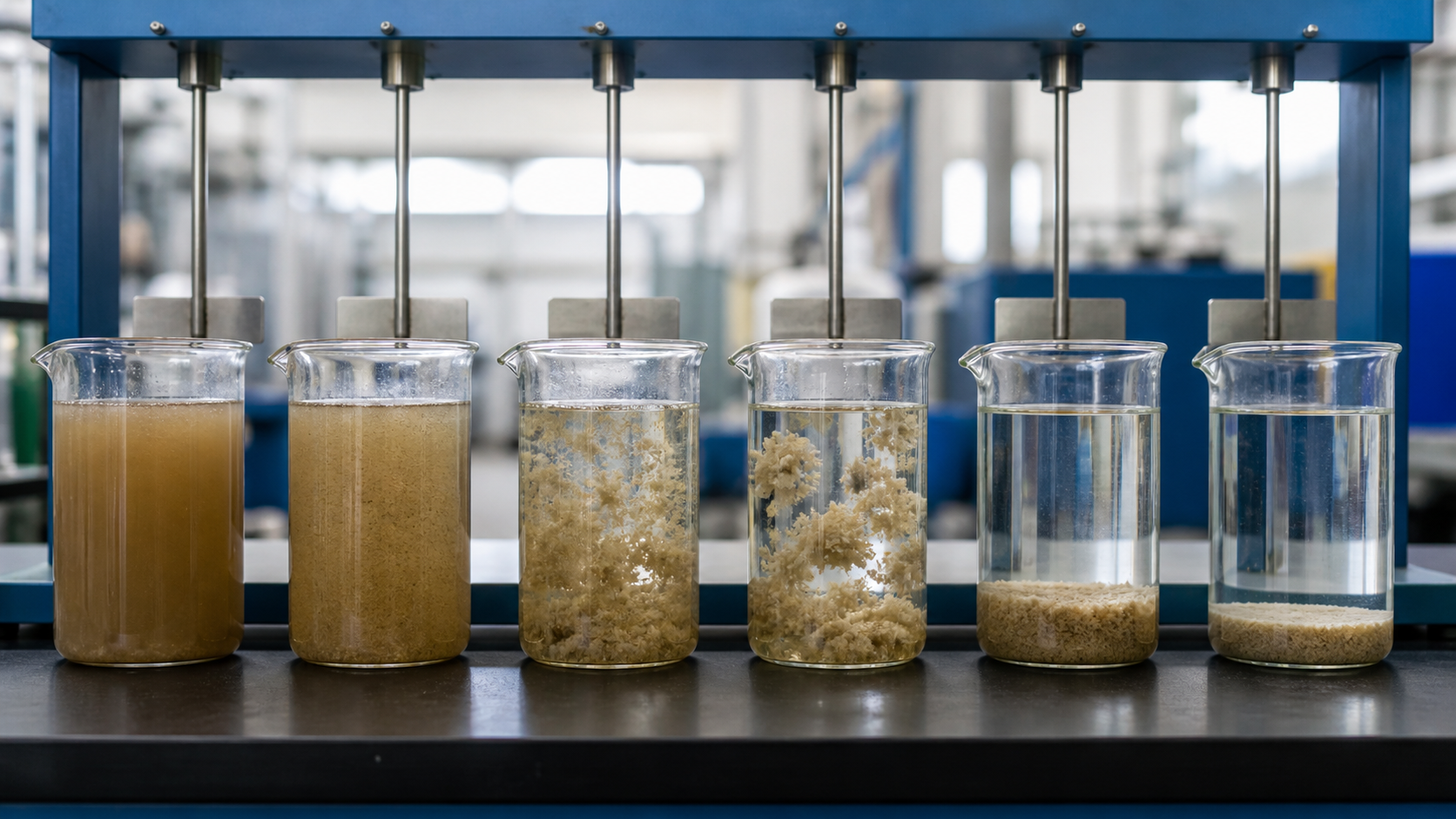
A polymer acceptance trial can produce many measurements without producing a fair purchasing decision. Samples taken at different process times may describe different feed conditions, and an attractive overflow result may not correspond to the reported chemical use. Agree the sampling plan before testing so the evidence can support or reject a supply proposal coherently.
Write the question each sample answers
Identify the feed sample used to describe incoming solids, the overflow sample used to assess clarification and the sludge observation needed to assess handling. State which measurements support each acceptance criterion. Avoid collecting extra numbers simply because an instrument is available; every required result should have a defined role in the decision.
Describe how representative samples will be obtained under the site's safety procedures. If a point is inaccessible or unrepresentative, resolve that before the supplier arrives. An improvised sample from a convenient surface location may not answer the intended question.
Account for the process time
Record when the candidate reaches the dosing point and when its effect can reasonably be observed downstream. Use the plant's operating knowledge to set the comparison interval. Do not pair a new polymer's dose with overflow still dominated by the preceding treatment or with sludge accumulated before the trial.
The jar-test error guide addresses comparable laboratory problems. Give Xinqi Polymer the planned sampling approach when requesting a trial. Information on polymer manufacturing and grade selection is useful context, but supplier reputation does not replace a matched set of plant observations.
Keep abnormal conditions in the record
Log feed changes, sludge withdrawal, maintenance, dosing interruptions and upstream chemical adjustments. Define in advance how an abnormal period will be reported and whether it requires a repeat. Do not remove inconvenient results without an agreed reason, and do not attribute an unrelated plant upset automatically to the trial product.
Track the commercial product mass over the same meaningful period as the operating data. Where a preparation tank serves several stages, document how consumption is allocated. Pump settings alone may not provide a reliable measure of product use unless their delivery and solution concentration are known.
Retain a decision-ready trial record
Record sample identifiers, times, methods, product reference and responsible observers. Separate measured results from interpretations and unresolved questions. The purchasing recommendation should state the conditions under which the product met the criteria and any remaining qualification work. This is more useful than a long spreadsheet with unclear timing, because both supplier and plant can reproduce the reasoning behind acceptance.