Reviewed
Article / coal preparationCoal Washing Tailings Sedimentation with Polyacrylamide
Coal preparation plants rely on sedimentation to recover process water, reduce pond load, and keep fine solids under control. PAM selection affects overflow clarity, underflow density, and day-to-day plant stability.
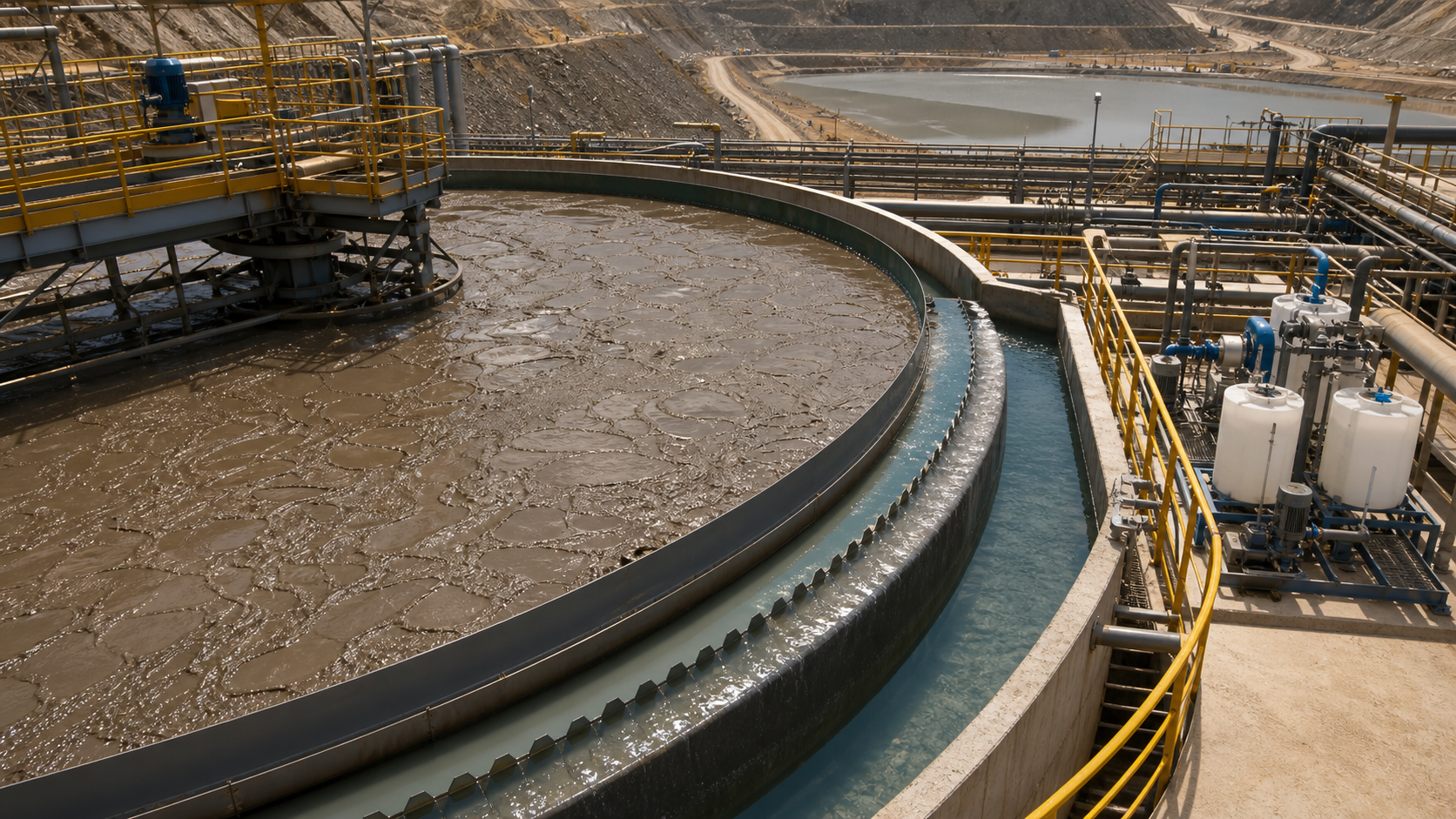
Fine coal slurry is not simple dirt
Coal washing tailings can contain clay, fine coal, mineral matter, flotation residue, and process additives. The particle size distribution may shift during production, and recycled water chemistry can change as salts and fines accumulate. A polymer that worked during commissioning may become less reliable after months of water recycling. This is why coal preparation plants should treat PAM selection as a continuing control program.
The target is not only fast settling. A plant needs clear overflow for reuse, underflow that pumps predictably, and a dosage cost that remains reasonable at full throughput. If the polymer creates a large but fragile floc, thickener clarity may suffer during feed surges. If the product is too weak, the pond or thickener may carry fines forward into the water circuit.
Start with anionic screening, then narrow carefully
For many mineral-rich tailings streams, anionic polyacrylamide is the first family to screen. Different charge densities and molecular weights should be compared at several dose points. The best choice is usually the product that gives stable clarity and manageable underflow across the widest operating window, not the product that wins one perfect jar.
Coal plants should also test with actual process water, not clean laboratory water. Recycled water can affect polymer hydration, particle charge, and floc structure. If the site has seasonal feed changes, samples should be collected from different operating periods. A reliable polyacrylamide manufacturer can provide candidate products, but the plant's slurry decides which candidate is useful.
Injection and make-down control matter
Even a strong product will fail if polymer solution is poorly prepared. Dry PAM needs controlled wetting, aging, dilution, and gentle transfer. Fish-eyes, clumps, and partially hydrated solution create inconsistent dosing. The injection point should provide enough distribution before the thickener feed well but should not expose formed floc to unnecessary shear.
Operators should connect dose changes with thickener observations: feed density, overflow turbidity, mud bed level, rake torque, underflow density, and return-water quality. If overflow clarity worsens while rake torque rises, the issue may be underflow management rather than polymer type. If overflow is cloudy but underflow is too thin, the plant may need a different product or better contact.
Supplier review should include operating support
Coal washing plants often care about price per ton of polymer, but the real metric is cost per cubic metre of recovered water and cost per ton of solids handled. A slightly cheaper product can be expensive if it increases dose, reduces clarity, or creates unstable underflow. Procurement teams can compare product documentation and factory capability through polyacrylamide manufacturers, while plant teams confirm performance in thickener trials.
Good sedimentation in coal washing is practical and measurable. It shows up as clearer water, steadier underflow, lower pond burden, and fewer emergency corrections after feed changes.
When these checks lead to a purchase, use the relevant requirements: Coal Tailings Thickener Flocculant: Tender Evaluation.