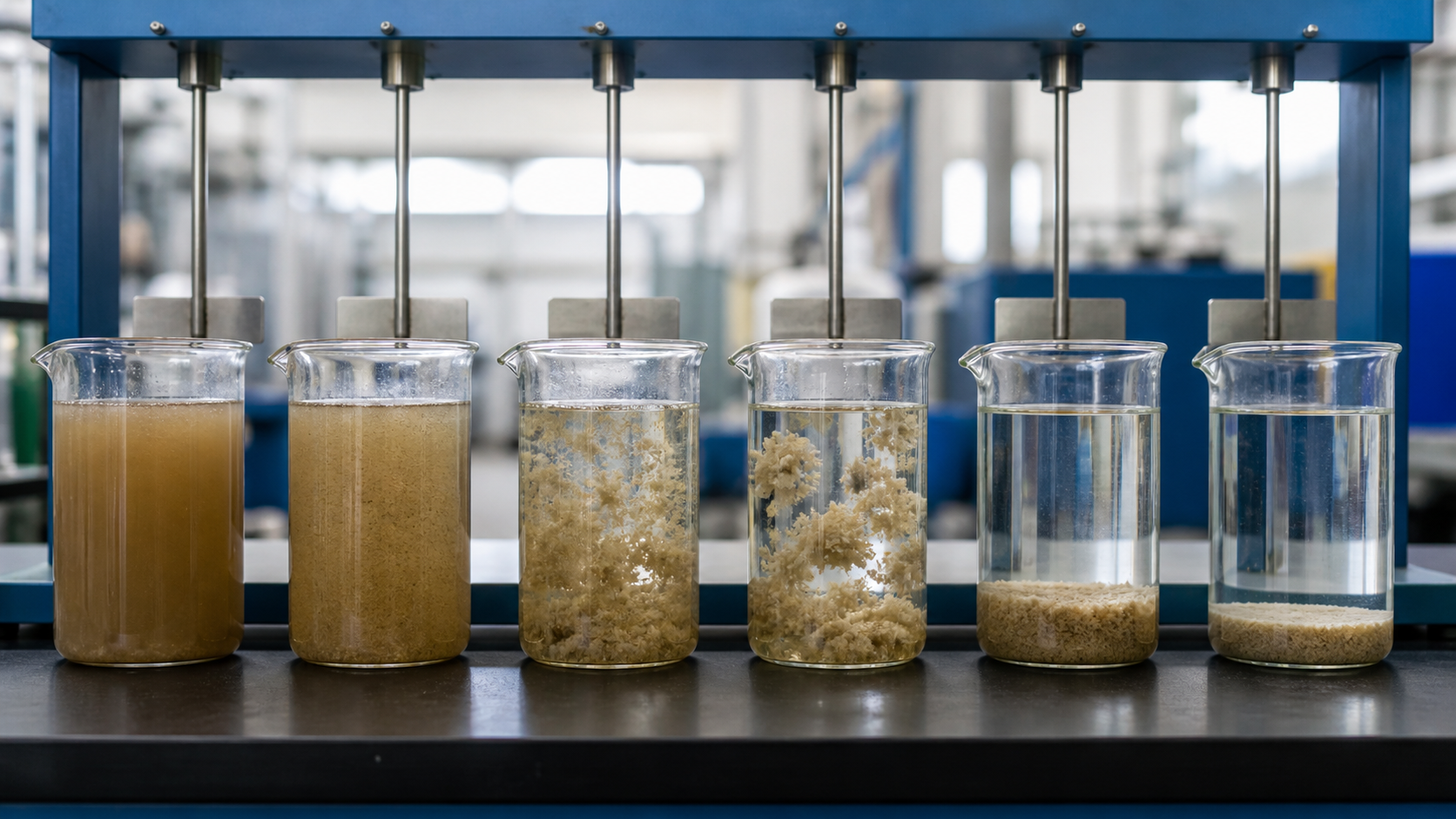
An anionic PAM quotation is useful only when the supplier understands the clarification duty. A price against the word polyacrylamide does not identify the candidate grade, the preparation requirements or the performance that must be demonstrated. Build the request around the water and equipment, then ask for a named product and an explicit basis for comparison.
Describe the duty before requesting a price
State the source of the suspended solids, normal and peak flow, measured solids range and the intended overflow use. Include pH, conductivity and significant upstream chemical additions where available. Explain whether the plant uses a conventional clarifier, inclined plates or a thickener. A drawing of the feed and injection arrangement can be more useful than a photograph of clear water.
Keep the process target separate from the purchasing quantity. Overflow quality, solids recovery and manageable sludge are performance requirements; tonnes per delivery and annual consumption are supply requirements. If consumption is estimated, identify the operating period and dose basis rather than presenting an uncertain forecast as a guaranteed order.
Ask for an identifiable candidate
Request the product reference, ionic family, physical form and grade-specific preparation instructions. Ask how quoted specifications are measured. Molecular weight or viscosity numbers obtained by different methods are not automatically comparable, and a high number is not a substitute for a controlled settling result. Use the supplier selection guide to organise the technical discussion.
Send the duty description to Xinqi Polymer when requesting samples. The anionic PAM range provides a product-family starting point, not a guarantee that every grade will suit the clarifier. Confirm the link between the proposed sample and the commercial product named in the offer.
Make the commercial comparison complete
Specify packing, delivery destination, required documentation and the expected order schedule. Require the supplier to state quotation validity and any exclusions. Separate the cost of an initial qualification quantity from subsequent production supply. A delivered price and an ex-warehouse price should not occupy the same comparison column without their remaining costs being identified.
List preparation changes or additional equipment separately. A low chemical price can be misleading if the product cannot be made down within the existing system's capacity. Conversely, do not reject a different form solely because its purchase price is higher; first establish whether a fair operating-cost comparison is possible.
Define the decision that follows the sample
Agree which feed conditions and operating measurements will qualify the product. Record who will run the trial, how the existing polymer will be used as a control and which limitations remain untested. Keep purchasing approval conditional on that evidence. A useful final RFQ makes clear what is being bought, what is still being evaluated and what the supplier must confirm before a production order is released.