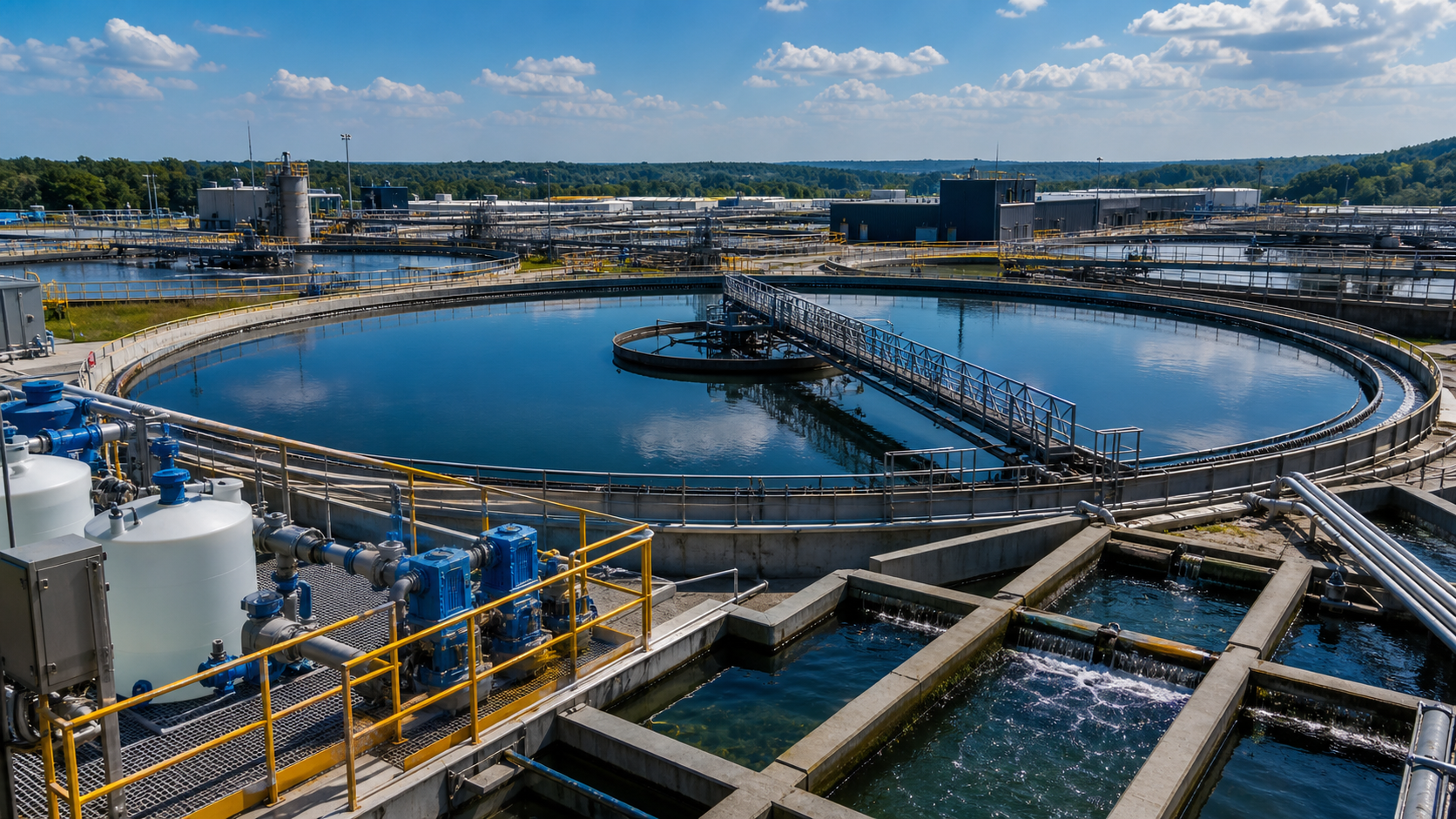
Uneven clarifier weir flow can concentrate withdrawal through a small part of the overflow perimeter. That local loading may carry solids out even when the average flow divided by tank area appears acceptable. Before increasing polymer, determine whether the collection system is distributing flow as intended and whether the poor overflow is local or present around the whole tank.
Make a location-based observation sheet
Divide the accessible overflow perimeter into identifiable sections. Record visible flow, deposits, floating material and the appearance of the adjacent water from safe access points. Repeat at a comparable total inflow. A consistent problem at the same section suggests a different investigation from a problem that moves with wind or occurs everywhere during a production surge.
Note whether the liquid level is stable and whether downstream collection channels are backing up. A restricted outlet can change the conditions at the weir without any upstream chemistry change. Use the design drawings and maintenance information to establish the intended arrangement. Do not lower or cut a weir plate as an informal operating adjustment.
Check level and obstruction under an approved plan
Weir alignment should be assessed using suitable survey or levelling methods by competent personnel. A visual judgement from one side of a large tank is not enough. Inspect deposits and damaged sections during an authorised maintenance window. Cleaning may improve the distribution, but the work needs the plant's fall, splash and isolation controls.
Relate the observations to the sedimentation operating guide. If Xinqi Polymer is supporting a trial, share the location-specific overflow results rather than one composite clarity reading. A flocculant manufacturer comparison is meaningful only after the trial's hydraulic boundary conditions are documented.
Compare local and overall effluent quality
Where the sampling arrangement permits, compare representative samples from the affected collection section and the combined outlet. Use an approved safe sampling method and avoid disturbed surface debris unless that is the specific fraction being investigated. Record total flow with each observation so a changing hydraulic load is not mistaken for a chemical response.
If floc forms and settles satisfactorily away from the heavily loaded section, collection hydraulics deserve priority. If fine solids remain distributed throughout the clarifier, review the incoming load, floc formation and settling conditions as a separate question. Local and general failures can coexist; correcting one does not prove the other is solved.
Confirm improvement across the normal range
After cleaning or an engineered correction, repeat the perimeter observations at ordinary and higher permitted flows. Check whether solids carryover moved elsewhere instead of actually decreasing. Keep photographs tied to marked locations and operating data. The useful result is a more even collection pattern with repeatable overflow quality, not simply a lower polymer invoice during an unusually quiet production shift.