Reviewed
Article / stormwaterHigh-Turbidity Stormwater Sedimentation and PAM Dosing
Stormwater sedimentation is difficult because the water does not arrive politely. Flow surges, solids change, and detention time may disappear exactly when the system needs it most.
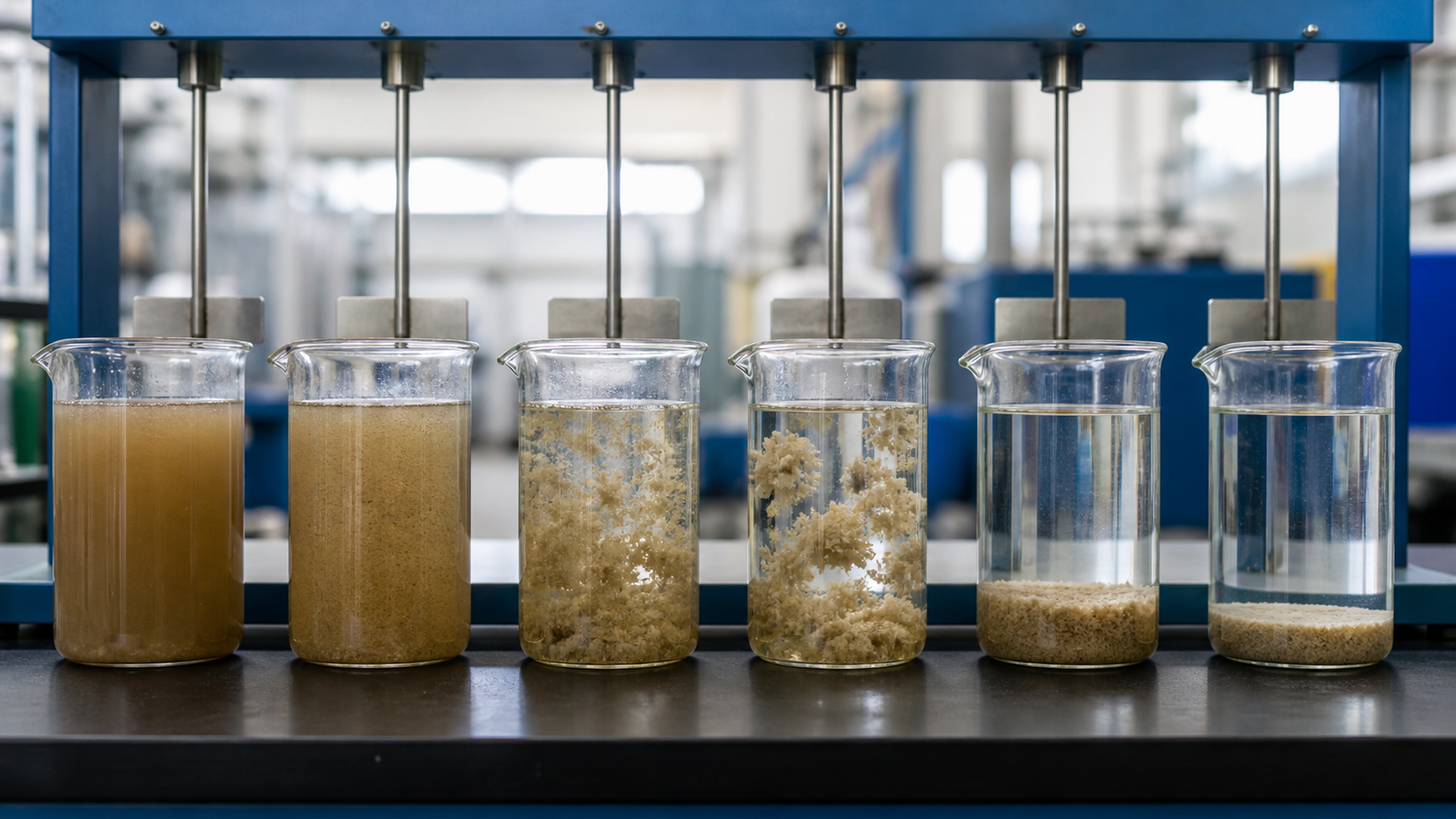
Why stormwater needs a different mindset
Unlike steady industrial wastewater, stormwater is event-driven. The first flush may contain fine soil, road dust, ash, organic debris, and construction sediment. Later water may be more dilute, but flow can remain high. A polymer program that works for one hour may be wrong for the next. This is why high-turbidity stormwater treatment should be built around sampling, staged settling, and adjustable dosing.
The first design question is hydraulic: does the basin provide enough contact and settling time? If inflow short-circuits to the outlet, chemical treatment will underperform. Baffles, inlet protection, skimmers, and staged ponds often improve the result before a higher polymer dose is considered. PAM can help fine particles settle, but it cannot replace basic sedimentation geometry.
Select products by solids behaviour
Mineral sediment usually points toward anionic screening. A site team may start with anionic polyacrylamide and compare charge density, molecular weight, and solution strength. If the water is less charge-sensitive, a nonionic polyacrylamide candidate can be useful. The important rule is to test the real stormwater rather than rely on a generic product label.
A jar test should include an untreated control, several dose points, and observation times that match the basin. If a site has only ten minutes of detention during peak flow, a jar that clears after one hour is not a useful success. Operators should record floc formation time, floc resistance to gentle shear, settled volume, and water clarity above the sludge.
Use conservative field dosing
Stormwater systems are vulnerable to overdosing. A dose that looks strong in a jar may create polymer carryover when flow rises. Field dosing should begin conservatively, then adjust based on outlet quality and visible floc behaviour. If discharge limits apply, polymer use should follow the local environmental approval and monitoring plan.
When comparing products and sample support, the main water treatment polymer product range is a practical starting point. For broader procurement review, buyers may compare production and export signals through China polyacrylamide factory information, but the field trial should remain the final decision point.
Link storm records with treatment records
Stormwater treatment improves when each event becomes a data point. Record rainfall, approximate flow, turbidity, pH, dose, polymer solution condition, basin level, sludge depth, and outlet appearance. Over several storms, patterns appear. The operator can see whether failures came from chemistry, flow, sediment loading, or basin maintenance. That record is more valuable than a one-time product recommendation.