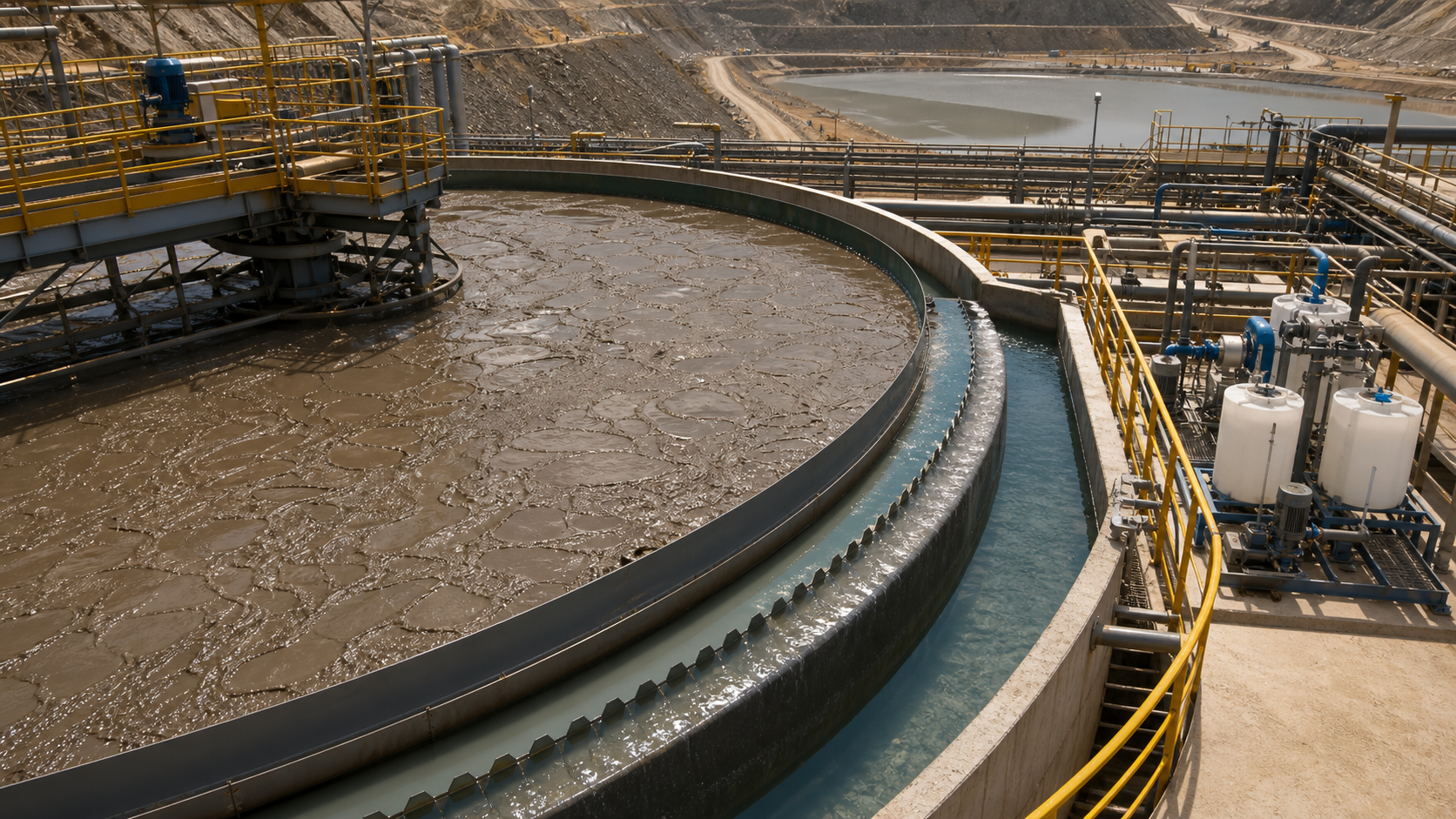
A sand washing plant should buy flocculant against its actual fines and recycled-water duty. Aggregate source, clay content and wash-circuit operation can change the separation response even when the production tonnage looks similar. A supply specification should describe those variations and define how a proposed PAM grade will be qualified.
Represent the material the plant really washes
Identify the feed sources and the normal blend. Keep a record of periods when a different deposit or stockpile enters production. Send representative slurry rather than clean surface water from a settled sample. Record solids concentration and sample handling so the supplier understands whether the material still represents the operating circuit.
If several feeds behave differently, retain separate screening samples before agreeing a combined trial. A single blended sample can conceal a difficult clay-rich period. Explain which conditions are frequent enough to be included in the supply requirement and which will require a separately approved operating response.
Define the two separation outputs
Set expectations for recovered water and for thickener or pond sludge. The wash circuit needs usable overflow, while the solids system must handle the resulting underflow. Ask operators to describe restrictions such as pumpability, removal equipment or available storage. Faster settling is not sufficient if it creates a solids-handling bottleneck.
Use the sand washing polymer guide to prepare operating information for Xinqi Polymer. The anionic PAM range is relevant to screening mineral slurries, but a deposit name alone does not establish the best grade or dose.
Include the recycled-water condition
Report the water used to prepare polymer and the water circulating through the wash plant. Record relevant changes during repeated reuse, including conductivity where measured. Ask whether the proposed sample was tested in representative water. A demonstration made with fresh dilution water may not reproduce the preparation or settling behaviour of the closed circuit.
Agree how operating staff will monitor the production trial. Record feed changes, polymer mass, treated volume and the two separation outputs on compatible time intervals. Do not claim a consumption reduction from a period when less material was washed or when the feed contained fewer fines.
Turn the qualified result into a repeat order
Name the approved product reference, packaging, batch documents and preparation instructions. State the conditions under which an alternative grade may be offered and how it will be reviewed. Keep commercial delivery terms separate from the technical operating envelope. This gives purchasing staff a repeatable specification while preserving a route to reassess the polymer when the quarry feed changes materially.