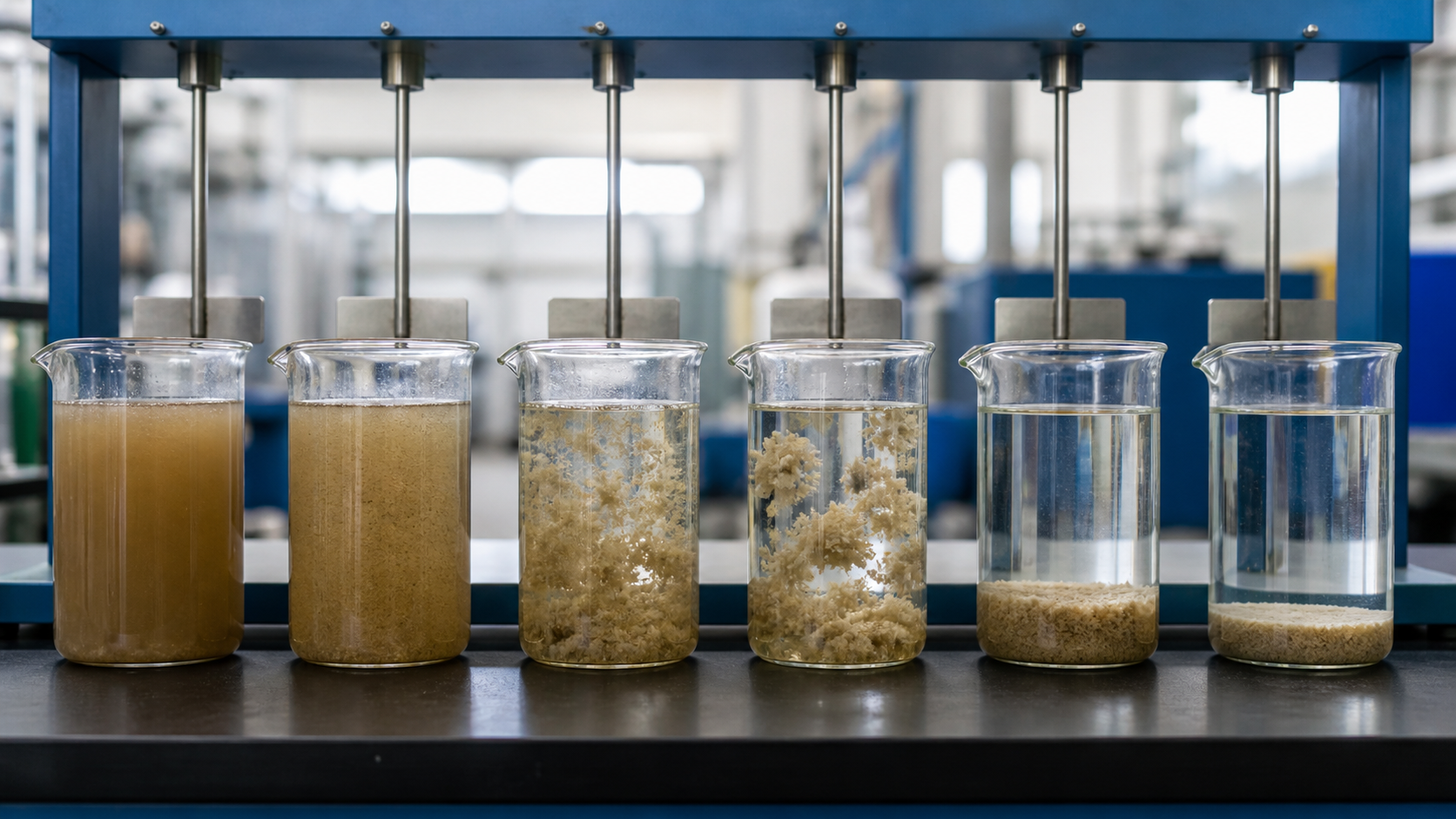
A coal tailings thickener flocculant tender should not award supply from the fastest settling cylinder alone. Overflow reuse, underflow handling and changes in the fine-particle feed all affect the useful operating result. Organise the tender so suppliers compete against the same duty and understand which conditions remain to be demonstrated at plant scale.
Give bidders the feed envelope
Describe the coal washing circuit, the tailings stream and the normal variability in solids and particle composition. Include significant process-chemical carryover where known. Identify operating conditions that produce difficult feed rather than providing only a sample from a quiet production period. Record how samples are collected and how long they are stored.
Distinguish the routine operating envelope from abnormal events. Suppliers need to know what the tender requires them to handle, but the plant should not assume that a chemical change can correct every upset. List mechanical or hydraulic constraints that remain outside the polymer's scope.
Score overflow and underflow together
Define the recovered-water requirement alongside the underflow properties needed by pumps and downstream handling. Record bed behaviour and relevant operating constraints during the plant trial. A product that produces impressive initial settling may still be unsuitable if its underflow cannot be managed reliably with the installed equipment.
The coal tailings sedimentation guide provides operating context for a quotation discussion with Xinqi Polymer. Compare proposed anionic flocculants through the same test conditions, and keep the commercial grade identity attached to every result.
Avoid an unbalanced price comparison
Require consumption to be reported against an agreed throughput basis and identify whether dose means commercial product or active polymer. Record preparation water, solution age and the actual product mass used. A bidder should not gain an apparent advantage by presenting a different dose basis or by excluding difficult operating periods.
Separate sample screening, plant qualification and commercial ranking. A technically unqualified bid can remain under consideration, but its unknown performance should not be converted into assumed operating savings. Document the extra testing or equipment needed before it can be compared fairly.
Define the production release decision
Set the acceptance procedure before representatives arrive on site. Specify who controls the trial, what triggers a return to the existing programme and which records support acceptance. The final supply agreement should retain the qualified reference, batch identification and change-notification requirement. Where the feed changes significantly after the tender, review the operating evidence instead of assuming that the original award proves suitability indefinitely.