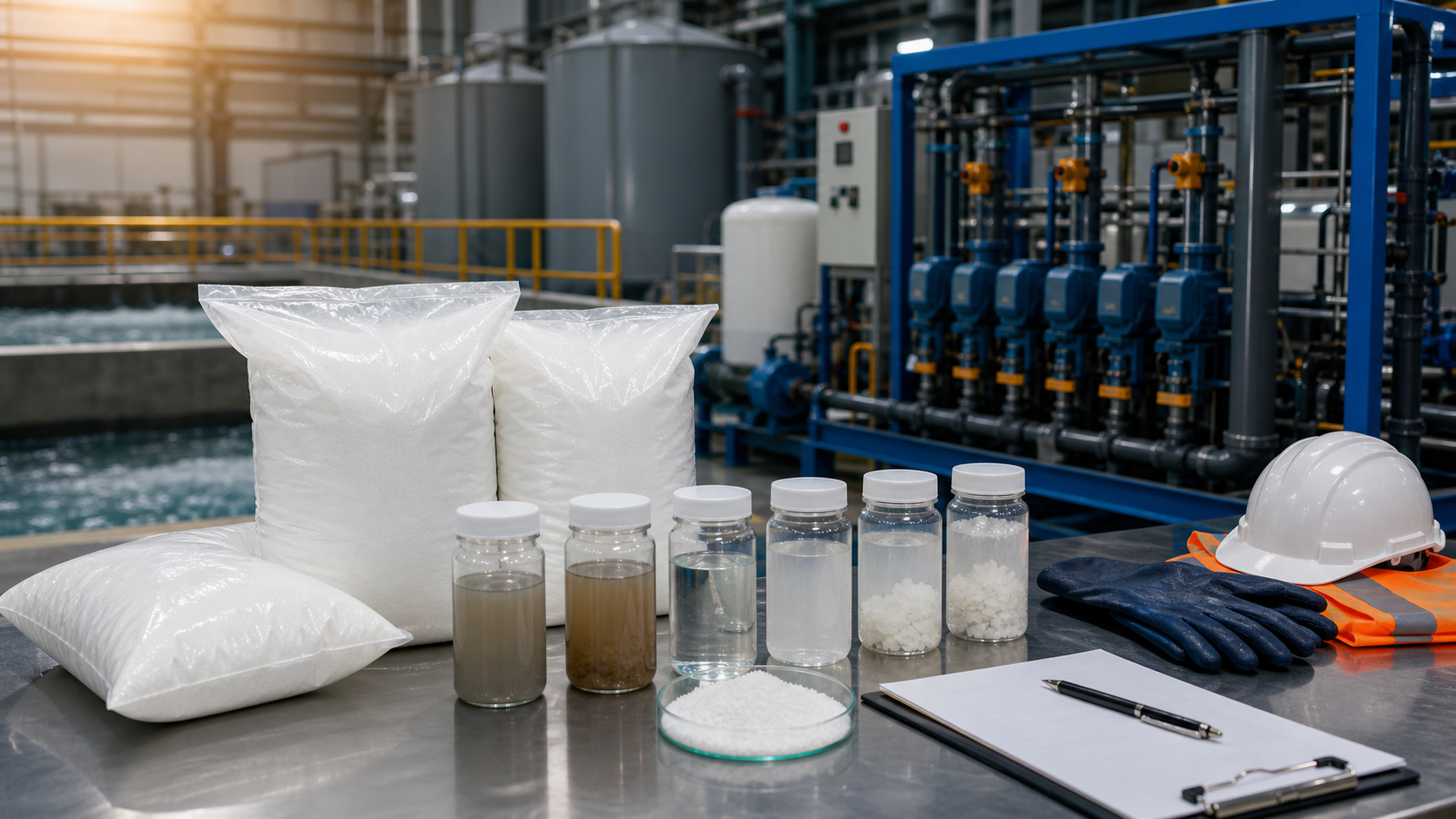
A ceramic wastewater PAM purchase should protect the production line as well as the clarifier. Fine particles left in recovered water can matter differently to settling, filtration and polishing. Translate a successful trial into a purchase acceptance record that names the product, the conditions tested and the production-quality checks that supported approval.
Start from the tested production condition
Identify the ceramic products and operations represented in the trial. Record changes in polishing load, cleaning additions and water reuse that occurred during the evaluation. Do not approve a grade for every production condition if the sample came from only one material or one stage of the process.
Check that the commercial sample reference matches the product offered for delivery. If the supplier proposes a different grade after a trial, request a technical explanation and a new qualification decision. Similar names or appearance do not establish that two formulations have the same response in fine ceramic slurry.
Agree acceptance at the reuse point
Ask production and quality staff to identify the relevant checks on recovered water. These may involve filters, nozzles or documented finish-quality observations, depending on the plant. Keep those checks alongside the clarification measurements. Do not invent a universal turbidity limit or treat visually clear water as proof that a polished surface will remain acceptable.
The ceramic clarifier trial guide covers how to obtain meaningful evidence. Provide the results to Xinqi Polymer when requesting a production quotation, and identify which mineral-water polymer candidates were actually tested rather than referring only to the broad product family.
Include the sludge burden in the award
Document sediment volume, removal frequency and the way the underflow reaches its next handling stage. A flocculant that improves overflow but consumes excessive sludge storage may move the problem rather than solve it. Include observations from normal production duration, not only the first clear overflow after a freshly cleaned clarifier starts.
Keep preparation and dosing conditions in the acceptance record. Operators need to reproduce the qualified solution, and receiving staff need to know which product identity was approved. A record that contains only the winning supplier's name cannot resolve a later question about a changed sample or shipment.
Release repeat supply with traceable conditions
Specify packing, lot identification, documents and the route for reporting a delivery discrepancy. Retain the demonstrated operating envelope and identify material changes that require re-evaluation. Where a product-quality concern appears after a new batch arrives, compare batch evidence and concurrent production changes before assigning a cause. This makes the purchasing decision traceable without promising that a polymer alone controls every reuse-quality outcome.