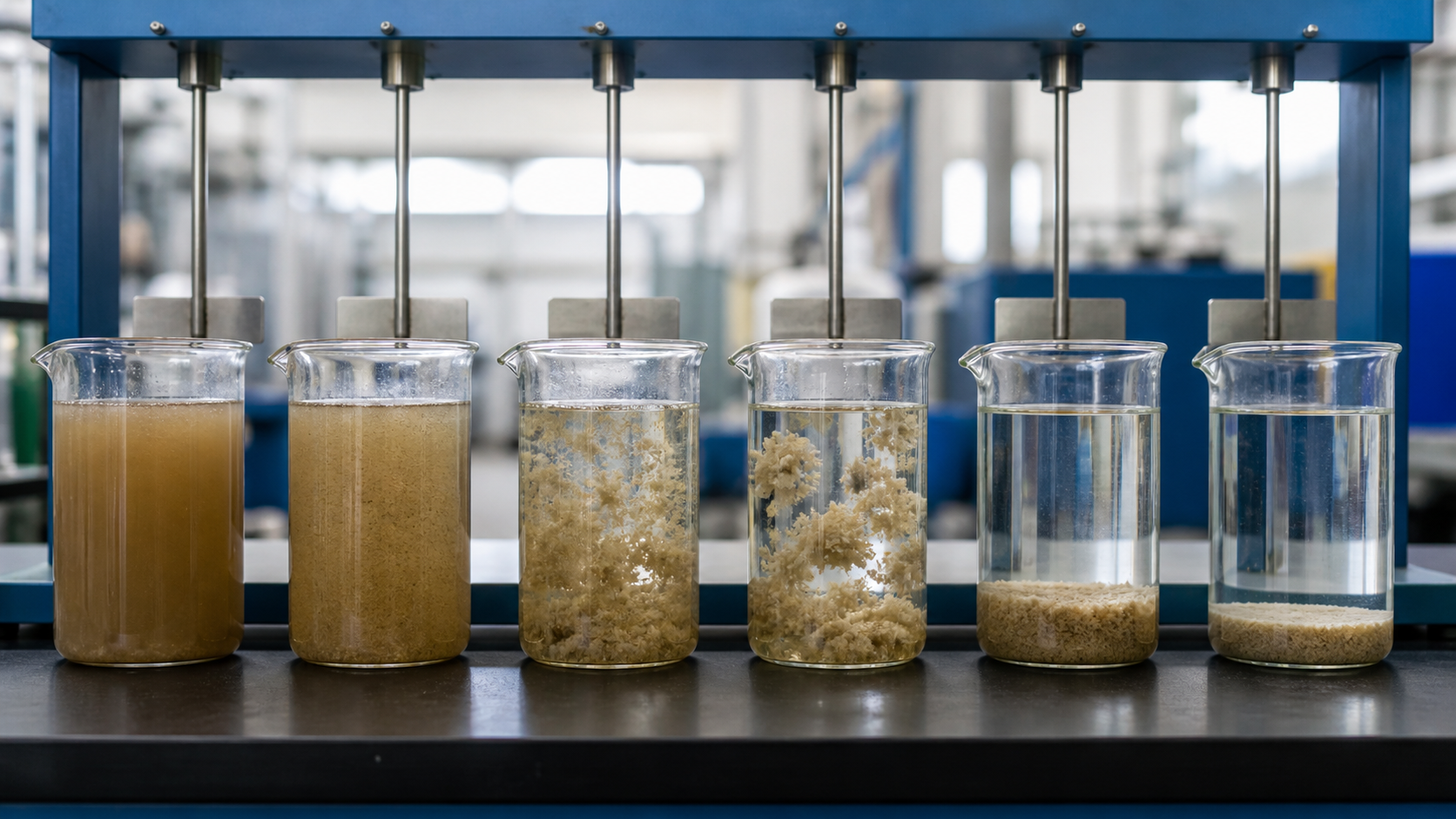
A concrete wash-water flocculant enquiry should distinguish suspended fines from the other properties of the recovered water. Settling can remove separable solids, but clear water may still have chemistry that limits reuse. Give the supplier a defined separation duty and involve the responsible production team in any decision about where the recovered water can go.
Identify the wash-water source
Describe whether the stream comes from truck washing, mixer cleaning or another operation. Record how it is collected, whether it is blended and what proportion is recycled. Explain the age of the sample and whether coarse material has already settled out. A bottle of surface water may omit the solids that determine the plant's actual chemical demand.
Provide available flow, solids and pH observations without assuming a universal dose from them. Distinguish normal operation from cleaning events that create a very different feed. Ask the supplier which sample quantities and handling conditions are needed before sending material.
State the intended use of the clarified water
Identify the receiving operation and who approves the water for that use. The concrete washout reuse guide explains why settling is only one part of the decision. Keep any production-quality or environmental checks in place; a polymer trial does not establish that clarified water is suitable for every application.
Discuss the separation duty with Xinqi Polymer and provide the reuse constraints at the same time. The anionic PAM family can inform screening for mineral fines, but a recommendation should refer to a named candidate and representative testing rather than a generic promise of clear water.
Include sediment removal in the test
Observe the volume and handling behaviour of the settled material as well as overflow clarity. Record how the plant removes sediment and whether it must pass through pumps or other equipment. A rapid-settling result may still create difficulty if the sediment builds up faster than the removal arrangement can manage.
Compare candidates under the same preparation and observation conditions. Keep the untreated sample and current treatment in the record. Avoid treating a clean-water photograph as a purchasing specification: it does not identify the dose basis, feed condition or solids-handling consequence.
Request a conditional production offer
Ask for the sample reference, commercial grade, preparation instructions, packaging and delivery basis. Separate the initial trial quantity from estimated repeat consumption. State the evidence required before a larger release. A well-defined enquiry gives the supplier enough information to propose a testable product while keeping the plant responsible for approving the complete recovered-water route.