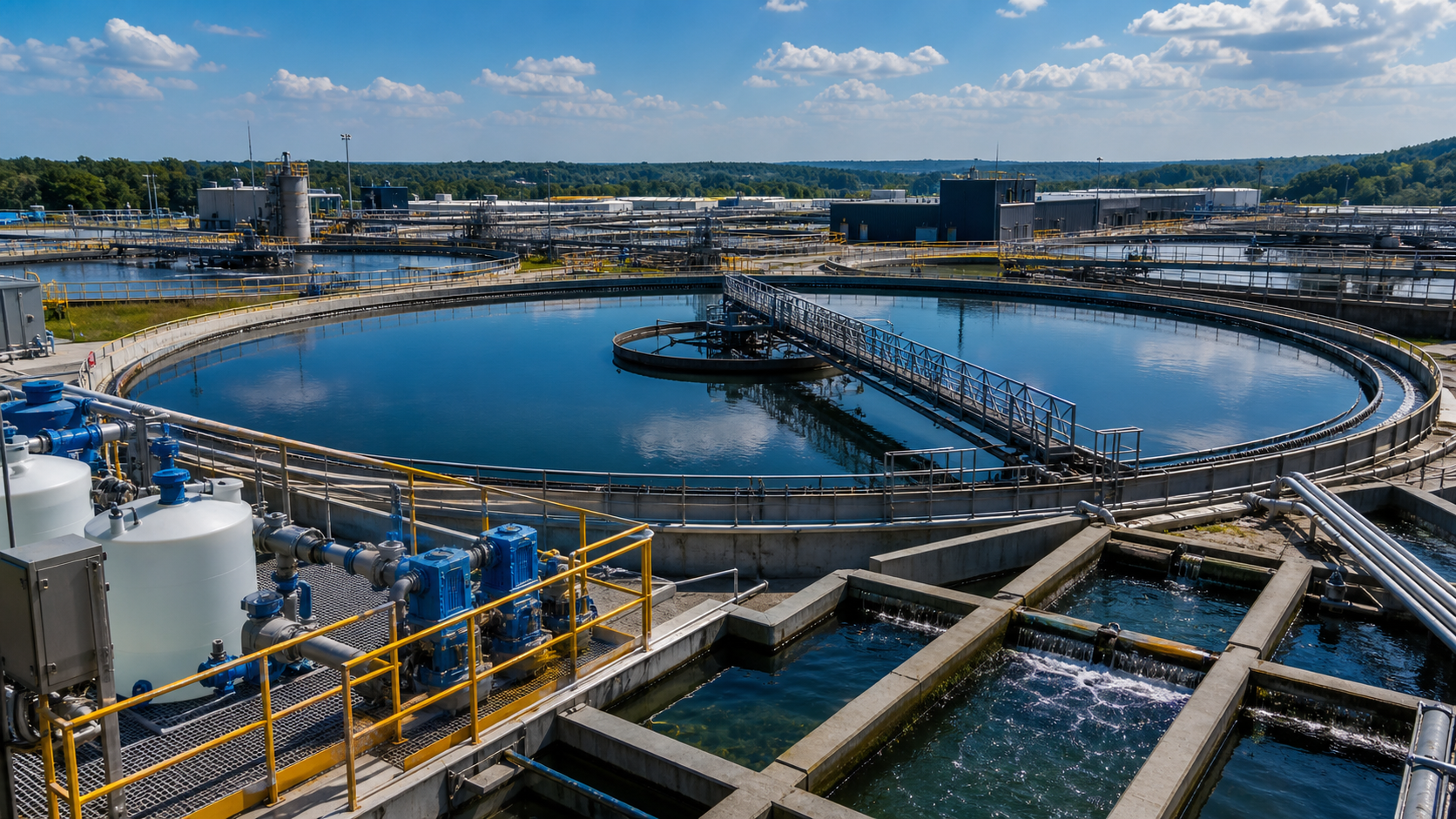
Concrete washout water reuse requires more than removing visible cement fines. Sedimentation can recover a clarified liquid while leaving dissolved constituents and high alkalinity in the water. Define the proposed reuse destination before selecting a clarifier or a flocculant. Water acceptable for one controlled industrial use is not automatically suitable for discharge, irrigation or concrete production.
Keep washout separate from ordinary stormwater
Map truck, chute and equipment washing to a contained collection route. Rain entering that system adds storage demand without removing the contaminants already present. The EPA concrete washout guidance explains why containment, recovery and management of the liquid and solids are important. Use project-specific environmental requirements for the final disposal or reuse decision.
Characterise samples from actual washing operations, not just the clear surface of an old pond. Record elapsed time after washing, pH, temperature, suspended solids and any admixtures entering the stream. A sample allowed to settle before testing may conceal the fines load the recovery system must handle during the next truck wash.
Separate a settling test from a reuse acceptance test
A settling test asks how quickly solids can be separated and how much sludge results. A reuse acceptance test asks whether the recovered water meets the needs of the receiving process. These questions need different measurements. Even excellent sedimentation cannot establish suitability for concrete mixing; the relevant materials and quality personnel must approve that application using its applicable specifications.
Use the site's sedimentation jar-testing method to organise the solids-separation comparison. If seeking samples from Xinqi Polymer, identify the washout chemistry and proposed reuse route. An anionic flocculant reference is a starting point for candidate discussions, not proof that a particular grade is compatible with every concrete admixture or receiving process.
Test the complete operating sequence
Compare untreated settlement with a small, documented polymer screening programme. Observe the supernatant, sludge compaction and the ability to remove settled material. Where pH treatment is required, have a qualified process designer establish its sequence and controls. Do not improvise acid addition into a washout pit: neutralisation can create handling hazards and different precipitates that change downstream solids separation.
Check whether the accumulated sediment can be removed without interrupting the entire washout service. A basin that produces clear water initially may fail once its working volume fills with solids. Include standby containment and the destination of recovered material in the operating plan rather than assuming a future cleanout contractor will solve the constraint.
Specify what releases a batch for reuse
The release sheet should identify the batch, laboratory or field results, approved destination and person responsible for acceptance. Keep off-spec water in an authorised contained route. Record any fresh-water blending separately; dilution is not evidence that an unapproved discharge has become acceptable. A robust reuse project connects settling performance to a documented water-quality requirement and a workable solids-removal schedule.